Mardi Himal Trek – 5 Days
Trip Facts
Country:
Nepal
Duration:
5 Days
Max Altitude:
4,500 m / 14,764 ft
Activities:
Trekking
Region:
Annapurna Region
Start / End:
Pokhara / Pokhara
Transportation:
Tourist buses and shared jeeps
Grade:
Moderate
Group Size:
Min 2
Accomodation:
Teahouse lodges
Trips Overview
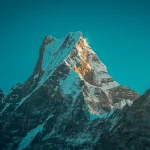
The Mardi Himal Trek is a short trek from Pokhara that climbs a long, narrow ridge to Mardi Himal Base Camp (4,500 m). The route only opened in 2012, so it’s quieter than the big Annapurna trails, and at the top you’re right below Machhapuchhre, the Fishtail mountain.
You start with a one-hour drive to Kande, then walk up through villages and thick rhododendron forest to Pitam Deurali, Forest Camp and Low Camp. Above Low Camp the trees end and the trail follows the open ridge, with the Annapurna range on one side and the Pokhara valley far below on the other. High Camp (3,550 m) is the last place with lodges.
On Day 4 you climb before dawn to the viewpoints and base camp below Mardi Himal (5,587 m) and Machhapuchhre, then walk all the way down to Siding. It’s a big day, but the morning views are the reason most people come.
The trek suits fit walkers and works well if you only have a few days. The trail is steep in places, and the ridge above High Camp can be icy in winter. You don’t need any climbing skills.
The best times to go are spring (March–May), when the rhododendrons flower, and autumn (late September–November), when the skies are clearest.
Trip at a Glance
The trek takes 5 days from Pokhara, with 4 days on the trail and a high point of 4,500 m at Mardi Himal Base Camp.
| Duration | 5 days (4 trekking days) |
|---|---|
| Start and end | Pokhara; the walk starts at Kande and ends at Siding |
| Highest point | Mardi Himal Base Camp, 4,500 m / 14,764 ft |
| Highest overnight | High Camp, 3,550 m / 11,647 ft |
| Difficulty | Moderate, with steep climbs; no climbing skills needed |
| Walking per day | 3–11 hours (4–6 hours on most days) |
| Best seasons | Spring (March–May) and autumn (late September–November) |
| Accommodation | Teahouse lodges on the trek (hotel in Pokhara not included) |
| Meals | Breakfast, lunch and dinner on the trek |
| Transport | Shared jeep from Pokhara to Kande and from Siding back to Pokhara |
| Permits | Annapurna Conservation Area Permit (ACAP) and TIMS card |
Trips Highlights
- Stand at Mardi Himal Base Camp (4,500 m), right below Mardi Himal (5,587 m) and Machhapuchhre (6,993 m)
- Watch the sunrise reach Annapurna South, Hiunchuli and the Fishtail from the ridge above High Camp
- Walk a quiet trail that only opened to trekkers in 2012
- Climb through thick rhododendron forest, full of flowers in March and April
- Follow an open ridge with the Annapurna range on one side and the Pokhara valley on the other
- Look down on a sea of cloud from Badal Danda, the "cloud ridge"
- Fit a Himalayan base camp into just five days, starting and ending in Pokhara
- Sleep in small, family-run lodges along the ridge
Route: Pokhara → Kande → Australian Camp → Pitam Deurali → Forest Camp → Low Camp → Badal Danda → High Camp → Mardi Himal Base Camp → High Camp → Siding → Pokhara
The walk starts at Kande, an hour’s drive from Pokhara, and climbs steadily for three days to High Camp. Day 4 is the big one: base camp at dawn, then a long walk down to Siding. Walking times are for an average trekker and include short breaks.
You gain height quickly on this trek, from under 2,000 m to 4,500 m in four days, so walk slowly, drink plenty of water and tell your guide if you get a headache.
Trips Itinerary
Your guide meets you at your hotel in Pokhara after breakfast, and a shared jeep takes you up out of the valley to Kande in about an hour, a roadside village where the trail begins.
The first climb is steady, through forest and terraced fields, to Australian Camp, a grassy ridge facing the Annapurna range. On a clear morning Machhapuchhre and the Annapurnas line up along the skyline.
From there the path follows the ridge through Pothana, where your permits are checked, to Pitam Deurali (2,100 m). It’s 4–5 hours of easy walking, a gentle start before the steeper days ahead.
Duration:
1 hour by shared jeep, then 4–5 hours walking
Accommodation:
Teahouse in Pitam Deurali
Max Altitude:
2,100 m / 6,890 ft (Pitam Deurali)
Meals:
Lunch, dinner
Today the trail leaves the villages behind and climbs into thick forest of oak and rhododendron, with moss hanging from the branches. In March and April the rhododendrons flower red and pink along the path.
Forest Camp (2,600 m) is a small clearing with a handful of teahouses and a good place for lunch. Above it the climb gets steeper through dense, quiet forest to Low Camp (2,990 m), at the edge of the trees.
If the sky is clear in the evening, Machhapuchhre appears straight ahead. Nights here are cool, so keep a warm layer handy.
Duration:
5–6 hours
Accommodation:
Teahouse at Low Camp
Max Altitude:
2,990 m / 9,810 ft (Low Camp)
Meals:
Breakfast, lunch, dinner
A short day of 3–4 hours, and one of the most scenic. The trail climbs out of the forest onto the open ridge at Badal Danda, whose name means “cloud ridge”. Often you look down on a layer of cloud filling the valleys, with the peaks standing above it.
From here the path follows the crest of the ridge, with grass, low rhododendron bushes and long drops on either side. Mardi Himal (5,587 m), first climbed in 1961, and Machhapuchhre come closer with every hour.
High Camp (3,550 m) is the last place to sleep on the route. You arrive by lunchtime, so rest, drink plenty and watch the evening light on the Fishtail before an early night.
Duration:
3–4 hours
Accommodation:
Teahouse at High Camp
Max Altitude:
3,550 m / 11,647 ft (High Camp)
Meals:
Breakfast, lunch, dinner
You set off around 5 am by headlamp and climb the ridge above High Camp. The path is steep in places, and in winter or after fresh snow it can be icy, so your guide may fit microspikes or turn back early.
As the sun comes up it lights Annapurna South, Hiunchuli and Machhapuchhre one after another. Many people turn around at the upper viewpoint, about an hour below base camp, where the views are already wide. If you feel strong, carry on to Mardi Himal Base Camp at 4,500 m, right below the peak.
Back at High Camp, have breakfast and pack up. Then a long, steep trail drops off the ridge through forest and farmland to Siding, a quiet village far below. With about 950 m up and more than 2,500 m down, this is a 9–11 hour day, and your legs will feel every step of it.
Duration:
9–11 hours
Accommodation:
Teahouse in Siding
Max Altitude:
4,500 m / 14,764 ft (Mardi Himal Base Camp)
Meals:
Breakfast, lunch, dinner
After a slow breakfast in Siding, a shared jeep takes you down the valley to Pokhara on a rough country road, about 2–3 hours, ending at the lakeside.
Spend the afternoon resting. Rent a boat on Phewa Lake, visit the island temple of Tal Barahi, or walk up to the World Peace Pagoda on the hill above the lake for a last look at the Annapurnas.
Duration:
2–3 hours by shared jeep
Max Altitude:
1,750 m / 5,741 ft (Siding)
Meals:
Breakfast
Trips Include
The price covers your transport to and from the trail, permits, guide, porters, lodges and trail meals. Your hotel in Pokhara and personal costs are extra.
- Pokhara to Kande by shared jeep
- Shared jeep from Siding back to Pokhara
- 4 nights in teahouse lodges during the trek (twin sharing where available)
- Meals during the trek (lunch and dinner on Day 1, three meals a day on Days 2–4, breakfast on Day 5), with tea or coffee
- Experienced, government-licensed, English-speaking trekking guide trained in first aid
- Porter service: one porter for every two trekkers, carrying up to 10 kg per trekker
- Salaries, meals, accommodation, insurance and transport for your guide and porters
- Annapurna Conservation Area Permit (ACAP)
- TIMS card
- Down jacket and sleeping bag for the trek (to be returned afterwards)
- First-aid kit and pulse oximeter, carried by your guide
- Trekking map and trip completion certificate
- Emergency rescue arrangements (paid for by your travel insurance)
- All government taxes, VAT and company service charges
Trips Exclude
- Travel between Kathmandu and Pokhara
- Hotel in Pokhara before and after the trek
- Meals in Pokhara
- International flights and the Nepal visa fee
- Travel insurance covering trekking up to 5,000 m and emergency helicopter rescue (mandatory)
- Personal expenses such as hot showers, battery charging, Wi-Fi and laundry
- Bottled or boiled water, soft drinks, alcohol, snacks and extra hot drinks
- Personal trekking clothing and equipment
- Tips for your guide, porters and driver
- Anything not listed under Cost Includes
Trips Altitude
Good to Know
You start walking around 7:30 after breakfast, stop for lunch at a lodge and reach the next camp by early afternoon. The exception is Day 4, when you leave High Camp at about 5 in the morning.
Dinner is around 6:30, and the camps go quiet early.
Above Low Camp you’re on an open ridge, and the weather can change fast. Mornings are usually clear, but by midday cloud often rises from the valleys. Wind makes it feel much colder than it is, and in winter the trail above High Camp can be snowy or icy.
Low Camp and High Camp have only a few small lodges. In October, November and spring they fill up, and you may have to share a room. Your guide books ahead, but expect simple places to stay.
Treat all tap and stream water, or buy boiled water at the lodges. Carry at least two litres for the climb from High Camp, as there’s nowhere to fill up on the way to base camp.
Toilets are shared and basic, especially at High Camp. Some lodges have hot showers for a fee, but on a short trek like this many people simply wait until they’re back in Pokhara.
Leave everything you won’t need at your hotel in Pokhara. Your porter carries your duffel bag, up to 10 kg per person, and you carry water, snacks, a warm layer, a rain jacket and a headlamp.
Machhapuchhre is sacred to local people, which is why it’s closed to climbers. Treat the ridge with the same respect: keep your voice down at sunrise, leave nothing behind, and ask before photographing people in the villages.
Carry all your rubbish back down, as the camps have no way to deal with it. Don’t pick rhododendron flowers, and stick to the main trail on the ridge, where the ground is easily damaged.
Trips FAQs
It’s a moderate trek with some steep climbs. Most days are 4–6 hours, but Day 4 is long: about 950 m up to base camp and more than 2,500 m down to Siding. You don’t need climbing skills, just good fitness and strong knees.
Yes, if you’re fit and walk regularly. It’s a good first trek in the Himalaya because it’s short and starts close to Pokhara. Train for a few weeks with hill walks or stair climbing before you come.
Two: the Annapurna Conservation Area Permit (ACAP) and a TIMS card. For most foreign visitors, ACAP costs NPR 3,000 and the TIMS card NPR 2,000. Both are included, and your guide arranges them.
Yes. Since April 2023, foreign trekkers in the Annapurna region must walk with a licensed guide and book through a registered trekking agency. This package includes one.
Spring (March–May) for rhododendron flowers and autumn (late September–November) for clear views. In winter (December–February) there’s often snow and ice above High Camp. In the monsoon (June–August), the forest is wet, leeches are common and cloud often hides the peaks.
You sleep no higher than 3,550 m, but you climb to 4,500 m on Day 4, and you gain height quickly on this trek. Mild headaches are common. Your guide checks your oxygen level with a pulse oximeter (a small clip on your finger), and if you feel unwell you turn back at a lower viewpoint.
Simple, family-run teahouses with twin rooms, blankets and a warm dining room. Lodges at Low Camp and High Camp are small and fill up in October and November, so you may share a room. Toilets are shared, and hot showers cost extra.
Dal bhat (rice and lentils, usually with free refills), noodles, soups, potatoes, porridge and pancakes. The choice gets smaller higher up, because everything is carried up the ridge.
Signal comes and goes along the ridge. Some lodges have Wi-Fi and charging for a small fee, so bring a power bank.
Bring Nepali rupees from Pokhara. USD 15–20 a day covers drinks, snacks, charging, Wi-Fi and hot showers, plus some money for tips at the end.
Yes. This price covers the trek itself, from Pokhara and back. Ask us and we’ll add hotel nights in Pokhara and transport or flights from Kathmandu.
Yes. Your policy must cover trekking up to 5,000 m, helicopter rescue and medical treatment.
Tips aren’t compulsory, but they’re welcome. On a short trek like this, many people give 8–10% of the trip cost, shared between the guide and porters.
Trips Reviews
No reviews found.